
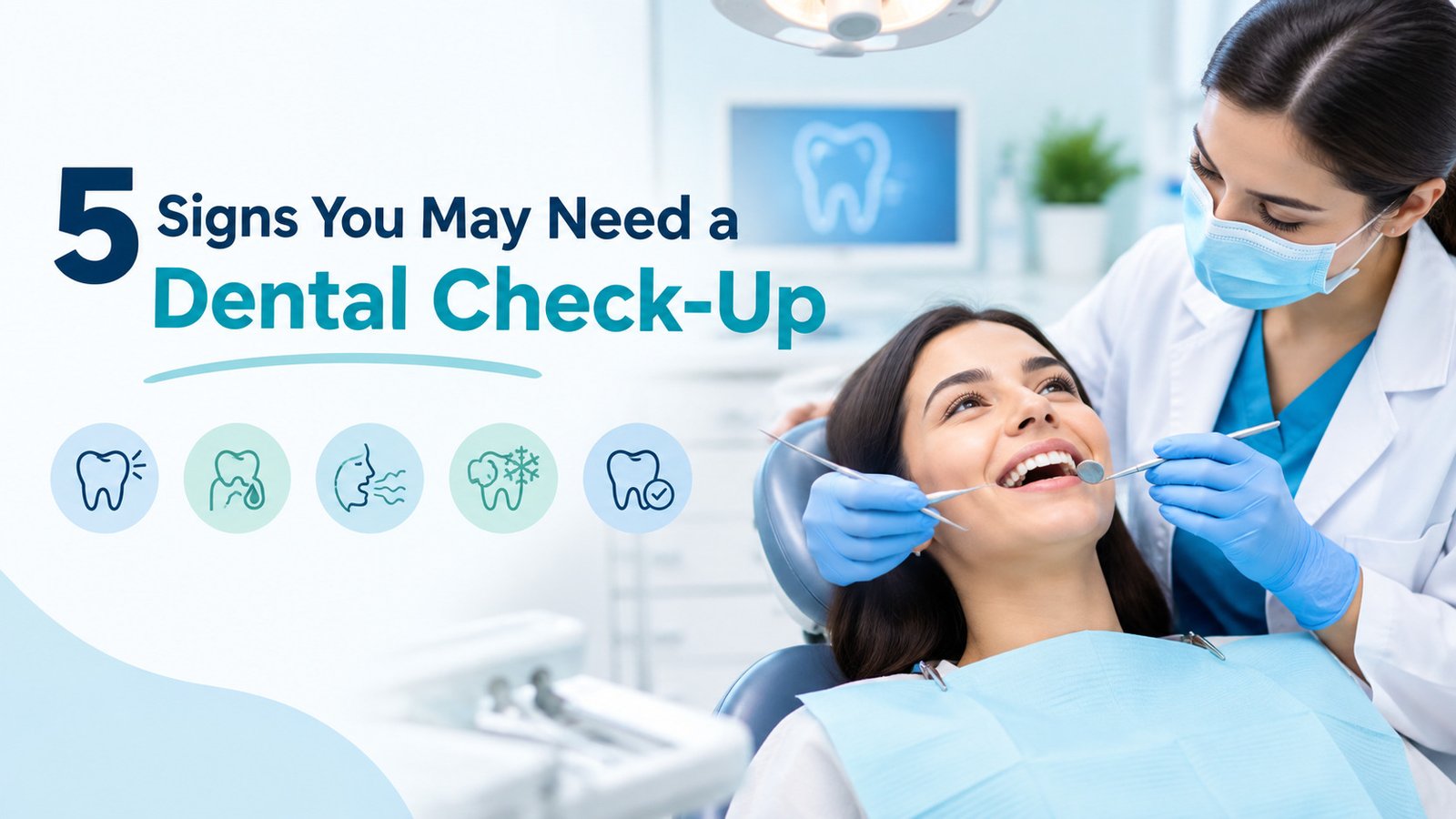
Regular dental check-ups are an important part of maintaining good oral health. However, many people only visit a dentist when they experience significant pain or discomfort. In reality, several dental problems can develop quietly before they become painful.
Here are 5 common signs that may indicate it is time to schedule a dental check-up.
1. Persistent Toothache or Dental Pain
A toothache should never be ignored, especially when the pain continues for more than a short period.
Persistent dental pain can be associated with problems such as tooth decay, infection, damaged teeth, or issues affecting the gums. A dentist can examine the affected area and determine the underlying cause before the problem becomes more serious.
Tip: Avoid relying on painkillers to manage recurring tooth pain without addressing the underlying problem.
2. Bleeding or Swollen Gums
Occasional gum bleeding while brushing or flossing may seem harmless, but frequent bleeding can be a warning sign of gum inflammation or gum disease.
Other symptoms may include:
- Red or swollen gums
- Tenderness around the gums
- Persistent bad breath
- Gums that bleed easily
- Receding gums
Early dental evaluation can help identify gum problems and prevent them from progressing.
3. Increased Tooth Sensitivity
Do you experience a sharp sensation when eating or drinking something hot, cold, sweet, or acidic?
Tooth sensitivity can have several causes, including enamel wear, gum recession, tooth decay, cracks, or exposed areas of the tooth.
If sensitivity is frequent or getting worse, a dental check-up can help determine the cause and appropriate treatment.
4. Persistent Bad Breath
Bad breath occasionally happens to everyone, but persistent bad breath despite regular brushing and mouth cleaning may indicate an underlying oral health problem.
Plaque buildup, gum disease, tooth decay, dry mouth, and certain oral infections can contribute to ongoing bad breath.
A dentist can assess your oral health and recommend appropriate treatment and oral hygiene practices.
5. A Chipped, Cracked, or Loose Tooth
A chipped, cracked, or loose tooth should be examined by a dentist, even if it does not hurt.
Damage to a tooth can sometimes expose it to further decay or infection. A dentist can assess the extent of the damage and recommend suitable treatment, which may include a filling, bonding, crown, or other dental procedure.
Don’t Wait Until You Have Severe Pain
Many dental problems are easier to manage when detected early. Regular check-ups allow your dentist to identify potential problems before they develop into more complicated conditions.
If you are experiencing any of these symptoms, consider scheduling a dental examination. Maintaining regular dental visits along with good brushing, flossing, and dietary habits can help protect your teeth and gums for years to come.
Take Care of Your Smile
Your oral health is an important part of your overall well-being. Don’t wait for a dental problem to become painful before seeking professional advice. If you have noticed any changes in your teeth or gums, schedule a dental check-up with your dentist.